I’ve Revamped and Rebranded the Digital Deliverance newsletter to Focus on What has Already Superseded the Mass Media as Consumers’ Predominant Way of Obtaining News, Entertainment, and Other information. As old dogs such as me get older, we sometimes forget the new…
Ask historians to say when the Industrial Era began and they will cite dates in the 18th or 19th centuries when a factory powered by hydraulics or steam engine was first constructed in their nation. I think they’re wrong. The start of…
The Time for the Mass Media Industries to Awake to Reality More than 20 years ago, the Mass Media industries myopically and thus catastrophically bet their future on the wrong path adapting to personal computer-mediated technologies. Subscribe to the Digital Deliverance newsletter…
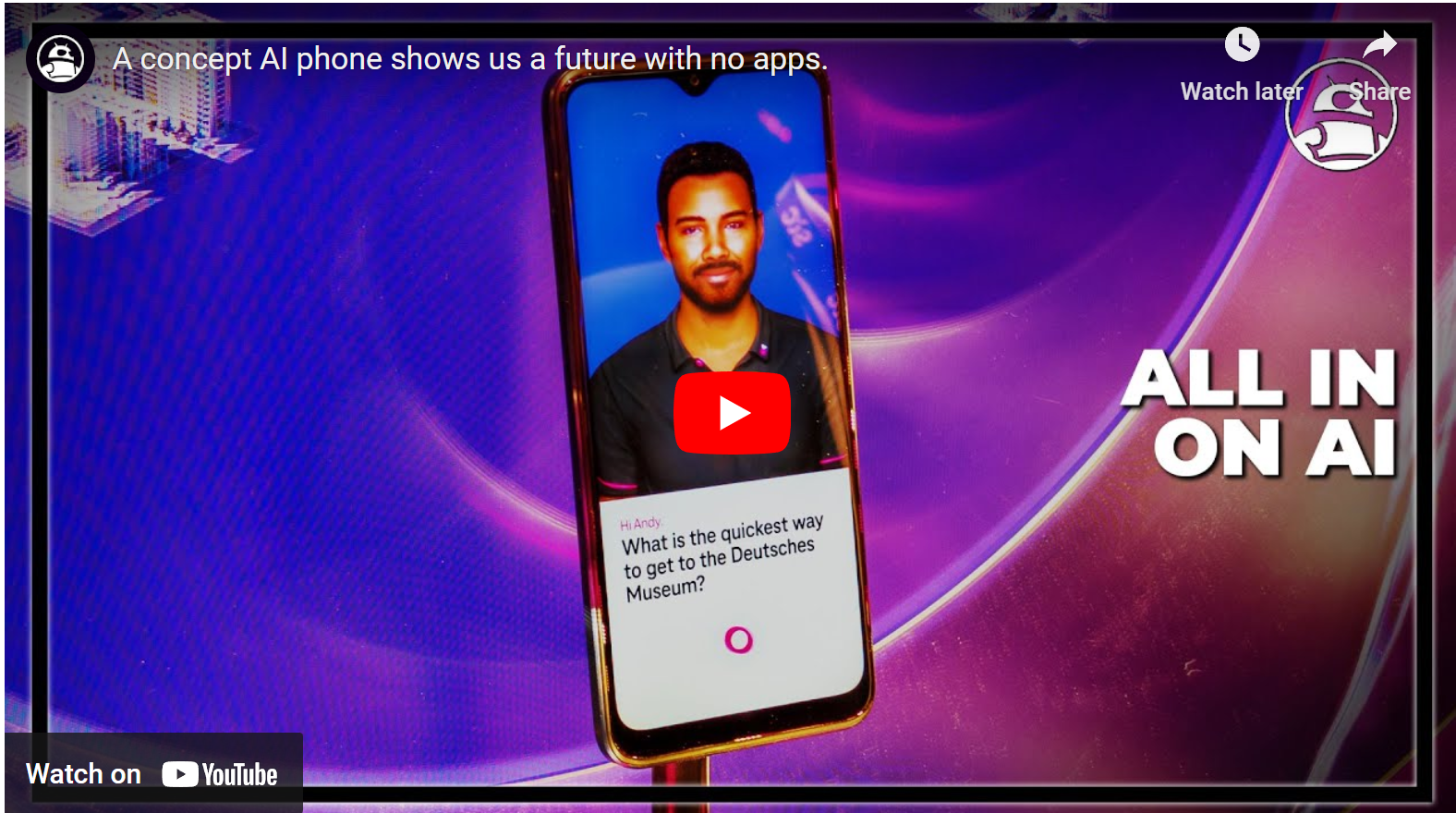
I wholeheartedly agree with this five-minute video story by Android Authority that the smartphone of the future won’t have or use Apps (i.e., individual single-purpose software applications) but instead simply use Artificial Intelligence (AI) to communicate/find/view.obtain/what its users wants.
The 2025 biennial World Media Economics and Media Conference will be held May 20-25 in Warsaw.
I’m pleased to have been invited by the Scientific Committee of the World Media Economics and Management Conference to present my latest paper at WMEMC’s next biennial meeting this May in Seoul, South Korea.
The passage of time proves whether or not a consultant’s foresight and advice were accurate. Judge for yourself if mine were.
Reality is that the world’s newspaper industry, indeed all of the Industrial Era’s legacy industries that are colloquially referred to as the Mass Media, have ultimately failed to adapt to the New Media environment, despite more than 25 years of endeavors, to…
Journalism professors who themselves have no academic training or professional experience in business yet who either believe they have solutions to the news industries’ business problems or who without that training or experience teach ‘media entrepreneurship’ dilute and interfere with the real solutions to the actual problems of media management and news business models.
As yet another magazine ceases publication in print, let’s discuss the general reason why the Mass Media is imploding and being superseded by Individuated Media.
As the Informational Era era and its Individuated Media supersedes the Industrial Era, the latter’s centuries-old forms of media industries (colloquially known as ‘Mass Media’) continue to implode. The remnants of the what used to be known as the Newspaper Association of America absorbs the U.S. Magazine Publishers Association.
I’ve spend much of the morning today watching a seminar in which eight daily newspapers from different European nations present their endeavors to generate subscriptions to their websites. I was perhaps the only one of the 1,200 people–virtually all from other daily newspapers, watching this online seminar not for its tips about how to generate online subscriptions but to assess how still myopic and misguided is the world’s newspaper industry. That industry, an integral product of the Industrial Era, botched its adaptation to the Information Era (an adaptation that nonetheless would have transformed that industry into something else). The error that botched its adaptation was that the industry’s ‘digital’ (i.e., ‘online’) pioneers (1995-2005) myopically misperceived computer-mediated technologies merely as means to delivery texts, still photos, and graphics, without purchasing, printing, and distributing paper editions. In other words, they saw online merely as a electronic distribution mechanism and websites as as non-paper versions of their traditionally printed editions.
This article published the peer-reviewed Nordic Journal of Media Management asserts that new, extremely popular modes of media services have arisen during the past 25 years that need to be critically categorized as different from the Mass Media we have known from…
Consider the predicament Christian monks working in their scriptoria faced in middle of the 15th Century from Johannes Gutenberg’s invention of the moveable-type printing press. It will illuminate the challenge the publisher and broadcasters of Mass Media faced today. Their scriptoria’s hallowed…
As the Industrial Era wanes and the Informational Era dawns, the focus of my consulting and career has changed from Mass Media to Individuated Media. If you don’t know what the latter are, read this.
The world’s media industries are more than a decade overdue to face, acknowledge, and act upon these nine bare facts about the epochal transformation of the media environment as the Industrial Era ends and the Information Era begins..
The U.S. newspaper industry’s trade journal interviews Vin Crosbie about that industry’s bright past and dim future.
Computer mediation means mediation, not simply electronic delivery. It means sorting and processing information on massive scales, which is what computerized technologies do best. They can sort, process, and deliver an individualized (i..e, individuated) supply of news to fit each individual consumer’s unique mix of needs, interests, and tastes. Computer-mediated technologies do this algorithmically. Computer-mediation is the hallmark of the dawning Informational Era. It makes no sense for legacy media industries not to embrace, adopt, and utilize these historically newfound capabilities. To use computer-media technologies merely as a means of electronic delivery is akin to using horses to pull an automobile along a paved road: a myopic misuse of capabilities.
Any technologies that can supply a consumer with the most precise mix of stories that match his own individual needs, interests, beliefs, and tastes, will triumph over technologies less precise. That is the reason why Google and other information search engines, why Facebook and other social media services, and why topical or ‘niche’ services that offer individuated feeds of music or other genres of information, have become so explosively successful during the past 20 years. Although they were not initial designed to provide consumers with individuated feeds of news, their computer-mediated algorithmic software can do so, as literally billions of consumers have discovered. This is why consumers now use such computer-mediated Individuated Media services as their predominant means by which they obtain news, entertainment, and other information, to the grave distress of legacy media industries that failed to adopt such technologies. That is how daily newspapers lost the future.
The financial disaster unforlding for the daily ewspaper industries due to the coronavirus pandemic is a late-stage event in an even greater struggle that has been underway in the media environment for more than 25 years. As the Industrial Era wanes and the Informational Era dawns, the predominant means by which most people under age 40 in developed countries obtain news, entertainment, and other information is now via Individuated Media rather than Mass. Click the headline to read this essay to find out what Individuated Media are and why they are supersededing Mass Media.
At the turn of the millennia, Digital Deliverance LLC began publishing a paid-subscription printed newsletter (the recession later killed it). In retrospect, we can state it used a media business model of the waning Industrial Era to provide advice about the…
The Rise of Individuated Media Vin Crosbie S. I. Newhouse School of Public Communications Syracuse University Syracuse, New York, U.S.A. [An Adobe Acrobat (PDF) version of this paper is available at Individuated.Guru] Author Note: Paper presented at the Rethinking Theories and Concepts of Mediated…
Perhaps I’m the only dissident among the approximately 250 media scholar attending the World Media Economics and Management Conference held this week in Cape Town, South Africa? The chosen theme of the conference is ‘In the Age of Tech Giants: Collaboration or…
Here is a quick, anecdotal example of the difference in legal rights between Mass Media and Individuated Media. I am an American who lives within sight of the building in which ‘Saturday Night Live’ is filmed. I would have like to see this…
In 1993, after two decades working for newspapers’ print editions and for two of the world’s major international news services, I switched the focus of my career to working full-time on journalism’s transition from print and terrestrial or cable and satellite broadcasting…
Previous webpage: Maelstrom as the Flow Changes “I wasalmost a sorry witness of such doings, knowing that a little theory and calculation would have saved him ninety per cent of his labor.” — Nikolai Tesla about Thomas Edison’s exhaustive experimentations. Access and…
Previous webpage: Some Corollaries of the Interactions of Moore’s, Cooper’s, and Butters’ Laws As Moore’s, Cooper’s, and Butters’ laws exponentially increased the power of computer chips and the bandwidth of the fiber optic lines and wireless signals connecting those chips, billions of people…
Previous webpage: When Moore’s, Cooper’s, and Butters’ Laws Interact on Media Here are some corollary effects resulting from observable dynamics of Moore’s, Cooper’s, and Butters’ laws. These go beyond the computer and telecommunications industries from which those dynamics directly stem and beyond the…
Previous webpage: Butters’ Law Acting on Media Alone, neither Moore’s Law nor Cooper’s Law nor Butter’s Law would have led to the world we know today and the one we will know in the future. During the past 50 years, Moore’s Law, without…
Previous webpage: Cooper’s Law Acting on Media We don’t live in a ‘wired’ world, but a ‘fibered’ world. Wired communications is obsolete. Metallic wires could never have sustained the phenomenal growth of the Internet and of the global telecommunications networks in general. The…
My reputation as a New Media consultant to the news industry, including my appointment since 2007 to teach postgraduate New Media Business at Syracuse’s Newhouse School, largely result from work I did long ago. For ten years beginning in 1993, I helped…
[34-minute PowerPoint video of keynote speech opening the fifth annual Personalize MEdia Conference (formerly Individuated Media conferences), Boulder, Colorado. June 20, 2011. How traditional media companies have gone astray by misperceiving consumers’ switch from analog to digital formats to be the greatest trend…