Modern media publishers face a pivotal choice echoing 15th-century scriptoria monks following Gutenberg’s invention of the printing press. Clinging to traditional mass media methods is proving unsustainable. To avoid obsolescence, media professionals must adopt algorithmic recommendation engines and individuated media, leveraging new technologies to effectively fulfill their core purpose of informing and entertaining audiences.
Relevance = Mass Production + Mass Reach + Mass Customization “What publishers think about news ‘relevance’ does not always align with what the public considers relevant to them.” — Center for News, Technology & Innovation Any Mass Media journalist, professor, or pundits who recommends that…
Know Who Has Steered the Mass Media Industries Into Catastrophe Craven are those who shun responsibility for formulating and sustaining the disastrous strategy that during the past 20 years has led the Mass Media industries to financial catastrophe and caused literally billions…
How Small Mass Media Companies Now Can Individuate Their Contents The scene could be Michelham Priory in England, Aulne Abbey or Groenendaal Priory in Belgium, or Maulbronn Monastery in Germany. Within scriptoria, within their monasteries surrounded by moats, medieval monks painstakingly labored copying books by hand. Although almost all the…
The correct strategy for the Mass Media industries must integrally solve seven requirements content creators, consumers, and advertisers have. These are the building blocks for the correct strategy: The Individuated Media newsletter is a reader-supported publication. To receive new posts and support…
The Time Has Come to Abandon Shovelware Strategy. What to Do Instead. In today’s newsletter, I’m going to post to all its free subscribers the entire contents of what I’d normally provide only to my paying subscribers. In fact, this is the…
I’ve Revamped and Rebranded the Digital Deliverance newsletter to Focus on What has Already Superseded the Mass Media as Consumers’ Predominant Way of Obtaining News, Entertainment, and Other information. As old dogs such as me get older, we sometimes forget the new…
The 2025 biennial World Media Economics and Media Conference will be held May 20-25 in Warsaw.
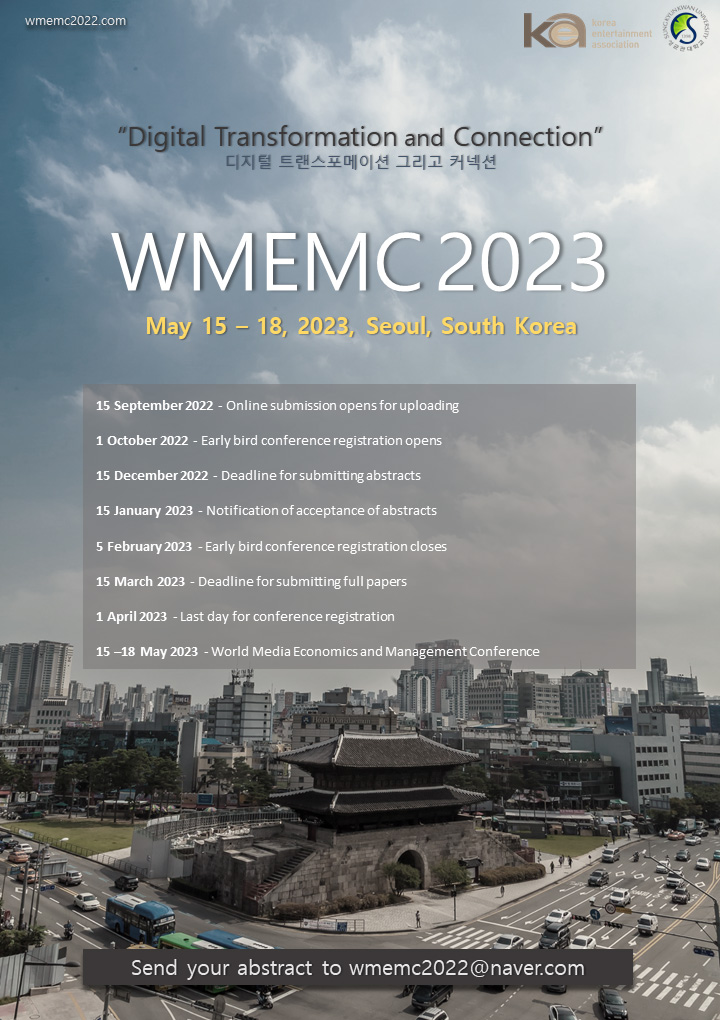
I’m pleased to have been invited by the Scientific Committee of the World Media Economics and Management Conference to present my latest paper at WMEMC’s next biennial meeting this May in Seoul, South Korea.
The biennial World Media Economics and Management Conference will be held May 15-18, 2023, at Sungkyunkwan University in Seoul, South Korea.
The passage of time proves whether or not a consultant’s foresight and advice were accurate. Judge for yourself if mine were.
Journalism professors who themselves have no academic training or professional experience in business yet who either believe they have solutions to the news industries’ business problems or who without that training or experience teach ‘media entrepreneurship’ dilute and interfere with the real solutions to the actual problems of media management and news business models.
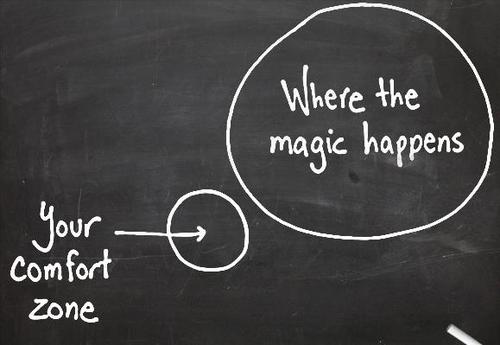
Anyone teaching Media Management needs to know the media within this geographic circle.
“The definition of the thing establishes its essence.” – ‘Metaphysics’, Aristotle (384-322 BCE) Know what are talking about. Otherwise, you might become a producer of hype rather than success. Words have real meanings. The traditional media industries are so woefully misusing terminology…
“In industry everyone focuses on achieving agreed-upon common goals. But in academia, everyone functions in their own bubble. We all work on our own research interests and we collaborate only when it’s necessary.” –Molecular Biologist Gavin Knott, quoted in The Code Breakers…
In May, I presented my conceptual paper Individuated Media in the Informational Era at the biennial World Media Economics and Management Conference in Rome. The paper has since been published the in the peer-reviewed, quarterly Journal of Strategic Innovation and Sustainability. I…
This article published the peer-reviewed Nordic Journal of Media Management asserts that new, extremely popular modes of media services have arisen during the past 25 years that need to be critically categorized as different from the Mass Media we have known from…
Consider the predicament Christian monks working in their scriptoria faced in middle of the 15th Century from Johannes Gutenberg’s invention of the moveable-type printing press. It will illuminate the challenge the publisher and broadcasters of Mass Media faced today. Their scriptoria’s hallowed…
As the Industrial Era wanes and the Informational Era dawns, the focus of my consulting and career has changed from Mass Media to Individuated Media. If you don’t know what the latter are, read this.
The financial disaster unforlding for the daily ewspaper industries due to the coronavirus pandemic is a late-stage event in an even greater struggle that has been underway in the media environment for more than 25 years. As the Industrial Era wanes and the Informational Era dawns, the predominant means by which most people under age 40 in developed countries obtain news, entertainment, and other information is now via Individuated Media rather than Mass. Click the headline to read this essay to find out what Individuated Media are and why they are supersededing Mass Media.
Although the folk tale of Hane Pene [Danish: ‘Rooster Pene’) was originally Scandinavian, I tend to think of it as American whenever North Americans talk about forms of Artificial Intelligence (AI). The Dane. Just Mathias Thiele in 1823 published one of the…
Although I’m scheduled in late August to start my eleventh consecutive academic year teaching New Media Business, a required course which I wrote and for which I am the sole instructor in the S.I. Newhouse School of Public Communication’s master’s degree in…
At the turn of the millennia, Digital Deliverance LLC began publishing a paid-subscription printed newsletter (the recession later killed it). In retrospect, we can state it used a media business model of the waning Industrial Era to provide advice about the…
The Rise of Individuated Media Vin Crosbie S. I. Newhouse School of Public Communications Syracuse University Syracuse, New York, U.S.A. [An Adobe Acrobat (PDF) version of this paper is available at Individuated.Guru] Author Note: Paper presented at the Rethinking Theories and Concepts of Mediated…
Perhaps I’m the only dissident among the approximately 250 media scholar attending the World Media Economics and Management Conference held this week in Cape Town, South Africa? The chosen theme of the conference is ‘In the Age of Tech Giants: Collaboration or…
Here is a quick, anecdotal example of the difference in legal rights between Mass Media and Individuated Media. I am an American who lives within sight of the building in which ‘Saturday Night Live’ is filmed. I would have like to see this…
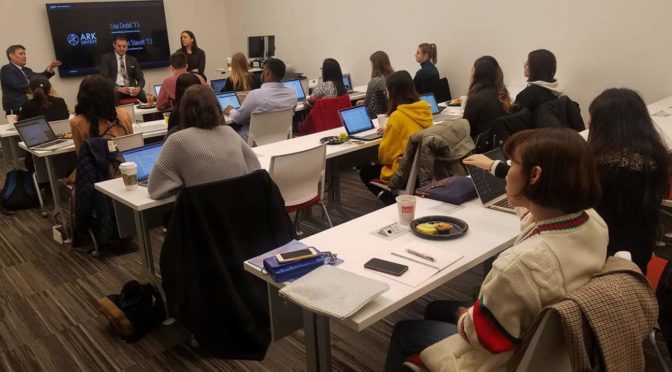
This week I’m in New York City sitting-in on a 39-hour (nearly non-stop for five-business days) course in which 18 alumni of my New Media Management master’s degree program at Syracuse University will teach 18 of my current students in the program.…
In 1993, after two decades working for newspapers’ print editions and for two of the world’s major international news services, I switched the focus of my career to working full-time on journalism’s transition from print and terrestrial or cable and satellite broadcasting…
Previous webpage: The Prism and New Media Chromodynamics The ‘Greens’ — A New Gravity When people’s access and choices of news, entertainment, and other information switches from relative scarcity to surplus, each person naturally gravitates to whatever mix of items from the entire…
Previous webpage: The Spectrum of Change The ideal prism with which to refract and examine the entire spectrum of change underway in the media environment, now that people’s access and choices of news, entertainment, and other information has changed from relative scarcity…
Previous webpage: Maelstrom as the Flow Changes “I wasalmost a sorry witness of such doings, knowing that a little theory and calculation would have saved him ninety per cent of his labor.” — Nikolai Tesla about Thomas Edison’s exhaustive experimentations. Access and…
Previous webpage: Personalization, Customization, Individuation, and New Media. A spectacularly obvious but remarkably little noticed aspect of the epochal change underway in the media environment is a reversal of the locus where contents are consumed. By locus or loci, I don’t mean what…
Previous webpage: Social Media and Early Platforms for Individuation. Many media executives and media academicians inadvertently conflate the differences between the terms personalization, customization, and individuation. The terms differ in meaning. Here is a primer about correct usage: Personalization is a form of…
Previous webpage: The Malestrom as Flow Reverses Much like how marketers affixed unnecessary decimal points to the terms Web 1 and Web 2, they’ve begun to misuse the term Web 3. Some term Web 3 (or ‘Web 3.0’) to be anything they happen…
Previous webpage: The Rise of Search Engines Heralds Individuated Media Since the new millennium began, billions of people have discovered a more practical way to obtain a customized supply of news, entertainment, and other information than manually using search engines or revisiting numerous…
Previous webpage: The Significance of Web 1 (‘Web.1.0’) and Web 2 (‘Web 2.0’) Why did more than three billion people begin routinely using the Web when they were already being served news, entertainment, and other information by the publications and broadcasts of…
Previous webpage: When Moore’s, Cooper’s, and Butters’ Laws Interact on Media Here are some corollary effects resulting from observable dynamics of Moore’s, Cooper’s, and Butters’ laws. These go beyond the computer and telecommunications industries from which those dynamics directly stem and beyond the…
Previous webpage: Butters’ Law Acting on Media Alone, neither Moore’s Law nor Cooper’s Law nor Butter’s Law would have led to the world we know today and the one we will know in the future. During the past 50 years, Moore’s Law, without…
Previous webpage: The Greatest Change in the History of Media Let’s be frank about the media industries. Most of its executives don’t care a hoot about exactly what is causing the tumultuous changes in their business environment. What they want, almost regardless of…
My reputation as a New Media consultant to the news industry, including my appointment since 2007 to teach postgraduate New Media Business at Syracuse’s Newhouse School, largely result from work I did long ago. For ten years beginning in 1993, I helped…
How will journalists could use Google Glasses ? It’s the wrong question. The right question for journalists to ask is how and why will people who consume media use Google Glasses (or similarly wearable optic interfaces)? Whenever I encounter media professors or…
For the past four years, I’ve been teaching a New Media Business for media course at Syracuse University’s S.I. Newhouse School of Public Communications. It was originally open just to postgraduate students, but a few years ago we opened it to select…
The S.I. Newhouse School of Public Communications seeks a Professor and Chair in Journalism Innovation, a new, endowed position that will help place the school on the cutting edge in teaching, scholarship and inquiry. The Chair will develop and teach new, innovative…
Whenever anyone from the traditional media industries writes, blogs, or tweets about Social Media, they miss the point. I find this so exasperating that I want to stab them with the point. Here is my thrust: When newspaper, magazine, radio, and television…
My thanks to Dr. Khalid Mohammed Ghazi, editor of the Cairo-based Arab Press Agency, for citing some of my work in his editorial, صحافة المواطن.. غائبة عن الصحافة العربية (Citizen Journalism…Absent from the Arab Press), published on Wednesday in, among other newspapers, Al…
Here are some savvy articles about how media is changing, will change radically, and why its companies might not be adapting to change.
Several hundred media professors will converge on Denver, Colorado, this week for the annual conference of the Association for Education in Journalism and Mass Communication. I won’t be among them (I’ll be at the Mayo Clinic in Minnesota, where my fiancé is undergoing…